


There’s something special about hearing a child recite Scripture—especially when they’re missing a front tooth or adding a little interpretive flair. (I have the best video of my middle daughter proudly belting out the Lord’s Prayer that will forever have a spot in my brain.)
But as sweet as that is, what I really want for my kids is this: That they love God’s Word.
That they find it trustworthy. Personal. Life-giving. Not just a Sunday morning obligation or a box to check—but a familiar voice they run to when life gets confusing or hard.
When It Feels Intimidating
If I’m honest, helping my kids engage with Scripture can feel intimidating. Between the busyness of daily life and my own moments of spiritual dryness, it’s easy to push it aside—or to feel so guilty about not doing it “right” that I don’t do it at all.
Here’s what I often have to remind myself:
I don’t have to be a Bible scholar or have it all together.
I just have to be willing to open to Psalms, tap the Bible app, or turn on a playlist.
If you’re in the same boat—wanting your kids to love Scripture but not always sure how to make it part of daily life with wiggly kids and full schedules—this list is for you.
1. Keep It Simple. Really Simple.
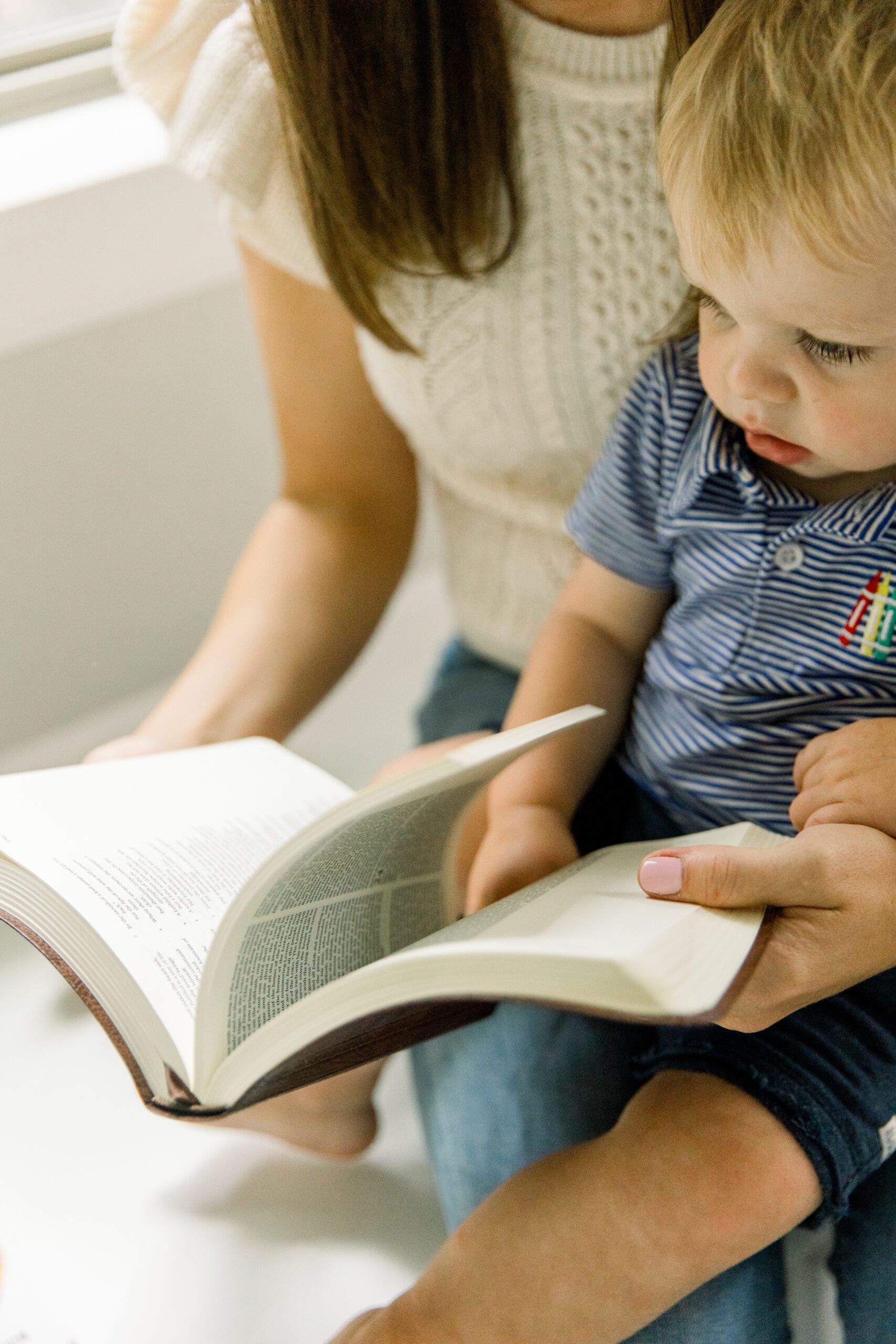
Reading the Bible with your kids doesn’t have to mean a 30-minute devotional time with color-coded notebooks. It can be:
- Two verses at breakfast
- One story before bed
- A question in the carpool line
- A quick prayer with Scripture before school
Little moments add up—so take the pressure off!
Small seeds grow deep roots over time. Don’t underestimate the power of five minutes of truth.
2. Choose a Version They Can Understand
The Bible wasn’t written in English originally, and not every translation is easy for kids (or adults 🙋🏻♀️) to grasp.
For years, our family has used The Jesus Storybook Bible by Sally Lloyd-Jones. While it’s not a word-for-word translation, its beautiful storytelling helps Scripture come alive for young hearts.
Other great options:
- NIrV (New International Reader’s Version)
- ICB (International Children’s Bible)
- CSB Easy for Me Bible
- For memorization, a regular ESV, NIV, or CSB is great!
If our kids don’t understand the words, they’ll miss the wonder. When we choose simplicity, it keeps them engaged.
3. Lean Into the Power of Story
While the Bible includes poetry, letters, and prophecy, I’m so thankful it’s also full of stories—real people encountering a real God.
Start with the narrative books: Genesis, Daniel, Ruth, Esther, or the Gospels. Our hearts are wired for story, so let that work in your favor!
Ask engaging questions like:
- What do you think that felt like?
- What would you have done?
- What does this story show us about who God is?
Another idea is to use a devotional with kid-friendly questions. Two of our favorites are I AM: 40 Reasons to Trust God by Diane Stortz and The Biggest Story by Kevin DeYoung for more family-friendly devotionals.
4. Memorize Scripture Together
What if you made it a family challenge? Pick one verse a month and learn it together.
Say it at breakfast. Write it on a sticky note by the sink. Sing it to a silly melody. Let them catch you memorizing, too—your example speaks volumes.
“I have hidden your word in my heart that I might not sin against you.”
—Psalm 119:11
Let’s give our kids something to reach for when life gets hard. (Plus, I know I can benefit from having more of God’s Word in my heart! It’s a win-win.)
5. Make It Interactive (Embrace the Wiggles!)
Kids learn best through movement, song, and play. Don’t feel like you have to keep everyone sitting perfectly still around the table.
Try these ideas:
- Act out Bible stories (stuffed animals welcome!)
- Sing memory verses to familiar tunes
- Let them draw or color what they hear while you read
- Add clapping or stomping to verses
- Use hand motions to help memorize (I can’t say Joshua 1:9 without dramatically emphasizing “wherever you go” with a sweeping arm motion!)
If they’re moving, giggling, or asking questions, you’re doing it right. Embrace those wiggles!
6. Be Okay with “I Don’t Know”
I used to worry my kids would ask spiritual questions I couldn’t answer. Now, it happens so often it’s practically a family tradition.
But here’s what I’ve learned: The times when I say, “That’s a really good question—I don’t know!” and then actually follow through by looking for the answer with them, those are the moments we both grow the most.
When we engage with God’s Word with our kids, we get to model curiosity and humility. Don’t be afraid to say, “Let’s figure that out together.” Then look it up! Ask a pastor. Message a friend. (Or shoot me an email—I’ll try to help!)
7. Let It Overflow from Your Own Life
If we want our kids to believe the Bible matters, they need to see it matter to us—not perfectly, not performatively, but personally.
Let them see you turn to Scripture when you’re worried.
Let them hear you pray God’s Word in your own quiet voice.
Let them catch you reading your Bible.
Faith that’s lived, not just taught, is the most powerful example.
Final Thought
Your job isn’t to force your kids to love the Bible. Your job is to introduce them to the God who loves them and invite them to know Him through His Word.
So start small. Keep it simple. Trust the Spirit to do what He does best.
You’re not alone in this and the Word never returns void.
How to Help Your Kids Fall in Love with the Bible


Comments: